Choosing Women’s Designer Shawls by Fabric Type
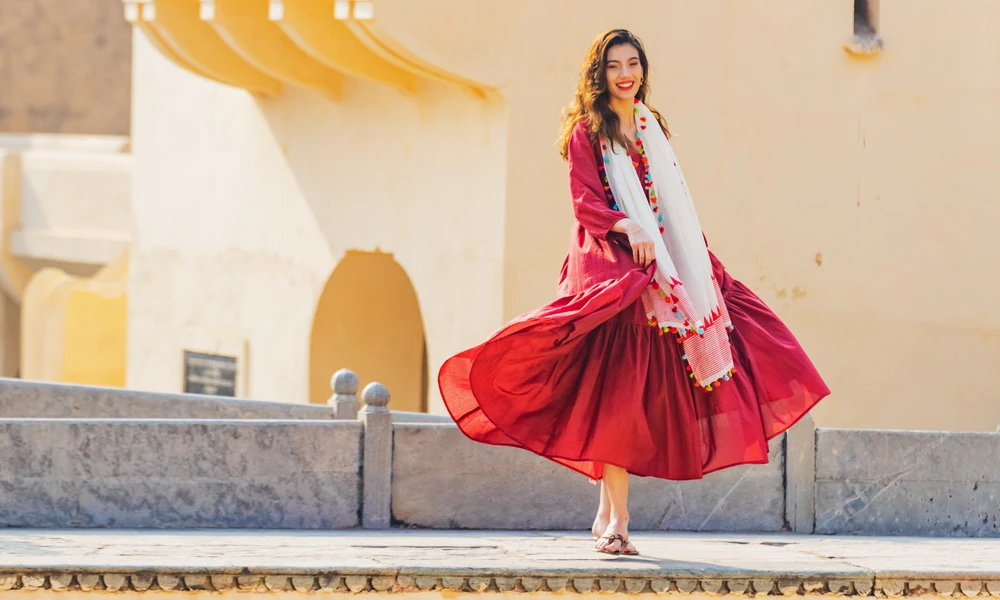
A designer shawl is not simply an item of accessorizing; it is a versatile item that could complement any outfit. The shawl is made of fabric that defines its fall, coziness and texture. This article provides information on how to select designer shawls for women depending on the type of fabric used to make them so that they could fit any wardrobe.
Selecting designer shawls based on fabric characteristics
Silk shawls for elegance and lightness
Silk shawls provide a light, smooth and non-bulky texture which does not add bulk. The natural shininess of the cotton material makes it perfect in styling decoratively during the warm seasons. Silk is easy to slip and untie and it needs a scarf ring or some hidden pin to be safe. Take these silk shawl features into account:
- Weight and feel: Ultra-light and easy to slide with a feeling that is easy to drape and adds elegance without adding any bulk.
- Warmth: Generally low heat retention, befitting mild temperatures and indoor use, thus appropriate in warmer seasons.
- Care requirements: Hand wash cold, dry flat, in shade, iron on reverse low temperature in order to keep its quality.
- Durability: The twill weave is more durable compared to crepe, however colours fade in direct sunlight, therefore keep out of sunlight.
- Occasion: Best to be worn at evening, summer events, or when it needs to be classy and added with the layer.
Cashmere for warmth without weight
Cashmere is soft with hollow core fibrous fibers that trap air without any weight. It is because the fabric has a natural crimp that forms small bubbles of air that retain heat, yet are breathable. Cashmere fibres stick together and this helps knots remain tied. Notable cashmere facts are:
- Warmth-to-weight ratio: Excellent lightweight insulation than regular wool, so it provides great potential as a lightweight warm garment.
- Weight options: Single-ply to use in all seasons and doubled Ply to use in cold seasons to provide versatility according to seasons and requirements.
- Softness: Fibers are unbelievably soft on the skin, giving it a luxurious feel of softness and non-irritation.
- Care: Cold hand wash using little detergent, dry press, keep out of the sunlight in order to keep the quality and life of the cashmere.
- Price range: Original works are usually of a moderate to expensive design, based on the quality of the material and the workmanship.
Wool and pashmina for durability and resilience
Wool shawls are durable, have a natural ability to bounce back and recover wrinkles that other materials cannot. Merino wool is a smoother, finer, but still a substitute of regular sheep wool, whereas pashminas are high-end, having a finer micron count. Wool is water resistant and odour repelling due to the natural lanolin content in it. The following are the features of wool and pashminas:
- Pashmina: This fabric is made out of Himalayan goats after taking weeks of labor to make such luxurious and delicate fabric.
- Merino wool: Soft, fine and strong: can be used in high quality wraps, to provide comfort and wear and tear.
- Wool shawls: Wool shawls are waterproof, warm and wrinkle-free and thus can be used on a daily basis.
- Price range: At the cheap end one can find ordinary wool, and at the expensive end, merino or pashmina, due to the quality and scarcity of fibres.
- Resilience: Deals with stresses that other fabrics cannot, suitable in traveling and retains its shape in course of time.
Summary
Selecting the women shawls of designers depending on the type of fabrics needs knowledge of the distinctive qualities of each fabric. Silk is light and sleek and cashmere and pashmina are lightweight yet warm. Wool is more durable and blends are flexible in order to meet specific demands. The appropriate choice of fabric makes sure that the shawl fits the lifestyle and climate of the person.